G.Neil Tools To Manage And Motivate People Phone orders 800-999-9111Live Chat
Shopping Cart
    GNeil Library Customer Care My Account
 
Attendance Tracking Employee Records Performance Management Personnel Software Hiring & Recruiting Training & Development Labor Law & Compliance Workplace Safety Workplace Communications Motivation Recognition Greeting Cards
New ProductsWeb Specials 
Free eNewsletter

Enter Priority Number
Catalog Quick Order
-


Live Chat
Community Resources
Don Poster Guard Member Self-Service Website Chart of Posting ChangesFree Poster Audit
Click to verify BBB accreditation and to see a BBB report.

Connect with us on ...

Twitter

HR Forum Blog

Family and Medical Leave Act Changes

On November 17, 2008, the first revision to the Family and Medical Leave Act regulations since enactment of the 1993 law was released by the Department of Labor. As expected, the new rules implement the new military leave law which provides job-protected leave rights to employees who care for covered servicemembers with a serious injury or illness, or who face “qualifying exigencies” because a covered military member is on active duty or has been notified of an impending call or order to active duty.  The new rule also makes several changes to existing FMLA regulations, including new notice requirements (including a new FMLA poster), medical certifications, and the definition of serious health condition and continuing treatment was clarified.

Many of our customers have contacted us with questions about how the FMLA changes will impact your leave policies and current labor law postings.

Q: What are the new FMLA changes?

A: The new FMLA rule implements the requirements to expand FMLA protections for family members caring for a covered servicemembers with a serious injury or illness incurred in the line of duty on active duty. These family members are able to take up to 26 workweeks of leave in a 12-month period.

The new military leave law also allows families of National Guard and Reserve personnel on active duty to take 12 weeks of FMLA job-protected leave to manage their affairs — “qualifying exigencies.” The new rule defines “qualifying exigencies” as: (1) short-notice deployment (2) military events and related activities (3) childcare and school activities (4) financial and legal arrangements (5) counseling (6) rest and recuperation (7) post-deployment activities and (8) additional activities where the employer and employee agree to the leave.

Other significant changes brought about by the final rule include:

  1. Serious Health Condition.  While the rule retains the six individual definitions of “serious health condition,” it adds guidance on some regulatory matters.  First, it clarifies that if an employee is taking leave involving more than three consecutive calendar days of incapacity plus two visits to a health care provider, the two visits must occur within 30 days of the period of incapacity. Second, it defines “periodic visits to a health care provider” for chronic serious health conditions as at least two visits to a health care provider per year.
  2. Medical Certification. Employers have five business days (up from two days) in which to request medical certification after receiving notice of an employee’s need for FMLA leave.  Employees are required to provide medical certification within 15 days after leave is requested in all cases of FMLA leave, including foreseeable leave. The new rule provides two sample medical certification forms employers may use to verify an employee’s FMLA leave request.
  3. Employer Notice Requirements. Notice requirements have been consolidated into one comprehensive one-stop section in the new rule.  Employers are required to provide employees with four different types of notices: general notices, eligibility notices, rights and responsibilities notices, and designation notices.

        
Q: When do the new FMLA regulations take effect?

A: The final rule takes effect on January 16, 2009.

Q: Will the new rules require me to post a new federal Family and Medical Leave poster?

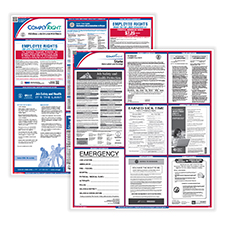
A: Yes. In addition, G.Neil is in the process of updating all of its FMLA-related products to reflect these recent changes, and to provide our customers with the most accurate and legally compliant products on the market.

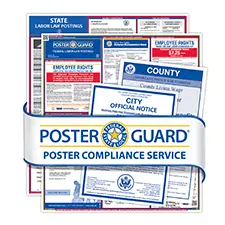
Poster Guard Compliance Protection by G.Neil monitors these developments on your behalf and automatically provides you with timely, updated postings in accordance with all posting guidelines, even if the change requires multiple new posters.

Q: When will the new poster be released?

A:  On December 18, 2008, the Department of Labor released an updated FMLA poster that includes the new revisions. G.Neil will automatically provide it to Poster Guard Compliance Protection customers. Guaranteed.

Q: Will the new rules require me to update my FMLA forms?

A: Yes, the new rules contained several new forms including an eligibility notice that employers must provide to employees indicating eligibility or ineligibility to take FMLA leave, generally within five business days after the employee either requests leave or the employer learns that the employee’s leave may be FMLA-qualifying.

Q: Will my state FMLA poster be affected by the new law?

A: Typically, state FMLA posters only address state FMLA laws. As such, most state FMLA postings will not be affected by the new federal law.

Q: As an employer, what should I do to comply with the FMLA requirements now that the law has changed?

A: You should inform your employees about the recent changes, including the posting of an updated FMLA poster as soon as one becomes available. Also, you should revise your current FMLA policies and procedures, and update or revise FMLA forms to reflect the recent changes. ComplyRight’s FMLA Administration System provides additional information and instructions on what employers must do to comply with the new FMLA rule.