G.Neil Tools To Manage And Motivate People Phone orders 800-999-9111Live Chat
Shopping Cart
    GNeil Library Customer Care My Account
 
Attendance Tracking Employee Records Performance Management Personnel Software Hiring & Recruiting Training & Development Labor Law & Compliance Workplace Safety Workplace Communications Motivation Recognition Greeting Cards
New ProductsWeb Specials 
Free eNewsletter

Enter Priority Number
Catalog Quick Order
-


Live Chat
Community Resources
Payroll Outsourcing Poster Guard Member Self-Service Website Chart of Posting ChangesFree Poster Audit
Click to verify BBB accreditation and to see a BBB report.

Connect with us on ...

Twitter

HR Forum Blog

G.Neil Press Releases
Sunrise, Florida
April 14, 2011
Tennessee Company Ordered to Stop Anti-Union Activity, Rehire Employees Fired for Union Organizing
Punishing employees for union activities puts companies at risk for lawsuits, fines, according to labor law experts at G. Neil
Sunrise, FL
May 16, 2008
What Employers Need to Know When Hiring Teens
With summer right around the corner, it’s important to be ready for the surplus of teenage employees. If a laundry list of state and federal child labor laws is not adhered to, the consequences for employers include potential costly litigation and fines.
Sunrise, FL
February 8, 2008
Businesses Warned of Family and Medical Leave Act Poster Compliance Issues
A recent expansion of the Family and Medical Leave Act (FMLA) means business owners will soon see offers, many of them misleading, from labor poster companies seeking to capitalize on the change.
Sunrise, FL
May 31, 2007
Businesses Warned of Deceptive Labor Law Poster Offers
New minimum wage law impacts poster compliance.
Sunrise, FL
February 20, 2007
Businesses Warned of Misleading Labor Law Poster Offers
Small business owners may find themselves bombarded with misleading marketing offers as a result of an updated poster released by the Occupational Safety and Health Administration (OSHA) detailing employee rights.
Sunrise, FL
June 27, 2006
Federal Immigration Legislation Could Have Costly Consequences for Employers
Proposed immigration reform legislation making its way through Congress could have some costly ramifications for U.S. employers, especially those in states with large numbers of illegal residents.
Sunrise, FL
May 8, 2006
Recent Influx of State Labor Law Changes Affects Employers
Almost every week, state labor laws are changed by the legislature or agency regulations. These labor laws often require employers to inform employees of certain protections and rights by posting state-mandated posters.
Sunrise, FL
April 21, 2006
New HIPAA Regulations Taking Effect April 21
The Health Insurance Portability and Accountability Act’s(HIPAA) new security rule mandates that covered entities safeguard protected health information that is electronically stored and transmitted.
Tennessee Company Ordered to Stop Anti-Union Activity, Rehire Employees Fired for Union Organizing

Three warehouse workers who were fired for activities related to organizing a union at Ozburn-Hessey Logistics, LLC, (OHL) have been reinstated, following an April 5th temporary injunction issued by Federal Judge Samuel H. Mays, Jr., of the U.S. District Court for the Western District of Tennessee (26-CA-23497 JD(ATL)-12-10)

The judge further ordered company officials to stop other actions designed to interfere with employee’s rights. Company officials and agents were allegedly “warning, and suspending or discharging employees because of their union activities,” issuing threats of benefit loss should the union be approved, and removing pro-union literature from lunch and break rooms, according to a press release issued by the National Labor Relations Board (NLRB.)

The NLRB’s Acting General Counsel has alleged multiple violations of labor law by the company in relation to a 2009 union organizing campaign by the United Steelworkers Union. A vote was held in March of 2010, in which the union lost. But since that date, allegations of labor law violations connected with the OHL union vote have been filed. NLRB administrative judges agreed that further investigation was warranted, and overturned the 2010 vote.

The reinstatements of the three dismissed are effective until the final resolution of the case before the Board. Judge Mays issued the temporary injunction on the 5th of this month at the request of the NLRB. He stated that it was “necessary to return the parties to the status quo to protect the NLRB’s remedial powers.”

Impact of the decision goes beyond the company involved in this action

Other businesses, responding to labor union organization, or on-going negotiations with existing unions, are concerned about how to best protect their companies and their employees. Regardless of opinions of the pros and cons of unions, recent decisions by the NLRB have made it clear that businesses must remain within the bounds of existing federal and state labor laws when dealing with union representatives or employees seeking to form or join a union.

Employers may not discriminate, discharge or retaliate against any employee for engaging in "protected, concerted activities." They must recognize which union organizing activities are protected. “Threatening employees who are attempting to unionize can result in a costly, time-consuming lawsuit with substantial liability,” said G. Neil Managing Research Attorney Lillian Mojica. “Even a few comments from an untrained supervisor can cause major issues for the employer.”

Possible new union rights poster could send businesses looking for more ways to manage union activity legally

The NLRB’s decision to date in this case, coupled with the potential summer issue of a new mandatory labor law poster outlining employees’ rights with regard to unions, means more and more companies may soon be looking for ways to minimize the impact of union activity in their businesses, while remaining within the bounds of federal and state labor laws.

Research indicates that businesses with a strong commitment to open communication, employee development and meaningful employee rewards have a much lower chance of being unionized. Companies who neglect these critical aspects of employee engagement are far more likely to find a union organizer welcomed into their midst by employees.

About Us

At G.Neil, we stand behind our commitment to provide accurate, timely and useful information about current federal and state labor law rulings, mandatory labor law postings and the tools your company needs to stay in compliance and on target.

For over 25 years, we’ve been the trusted choice of businesses across the U.S. and Canada for human resource materials, labor law posters and employee motivation tools. Visit us at http://www.gneil.com when you need the answers to your workplace management, labor law or employee engagement questions.


Back To Top
What Employers Need to Know When Hiring Teens


Labor Law Poster Compliance; An Employer’s First Line of Defense


With summer time right around the corner, it’s important to be ready for the surplus of potential teenage employees. Despite a slow economy, it’s estimated that businesses nationwide will hire millions of teens this summer, not knowing that they bring a set of issues they would not face when hiring adults.  If a laundry list of state and federal child labor laws is not adhered to, the consequences for employers include potential costly litigation and fines of up to $11,000 per violation.


According to Ashley Kaplan, compliance attorney for G.Neil, which offers Poster Guard Compliance Protection, a posting service that guarantees businesses are up-to-date with labor law compliance, proper posting is an employer’s first line of defense. 


“Having the right posters displayed eliminates the possibility of fines and by ensuring teen employees are notified of their rights can support an employer’s case in a lawsuit,” said Kaplan. “Also, the posters help owners understand the rules and can prevent accidents and injuries.”  Kaplan details a few of the specific federal rules regarding teens that businesses need to keep in mind:


1.     Scheduling – Federal law limits the hours 14 and 15-year-olds can work for non-agricultural employment.  When school is in session, they cannot work more than 3 hours per school day and no more than 18 hours per school week.  When school is not in session, they cannot work more than 8 hours per day and no more than 40 hours per week.  Also, 14 and 15-year-olds cannot work before 7 a.m. or after 7 p.m., except from June 1st through Labor Day, when hours are extended until 9 p.m.

2.     Hazardous equipment - The Fair Labor Standards Act (FLSA) prohibits workers under 18 from using hazardous equipment and operating power-driven machines, including meat-slicers, forklifts, cardboard compactors and bakery equipment. This year, according to the Department of Labor, 160,000 minors are expected to be injured or even killed at work, due to some form of child labor law violation.

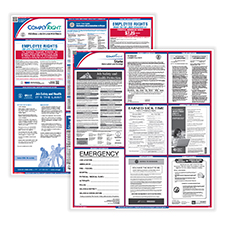
3.     Labor law posters – The law requires conspicuous posting of the FLSA poster, as well as other federal and state labor law posters, meaning it is clearly visible to all employees.  To find out if your company is compliant with all federal and state postings, visit www.freeposteraudit.com.


“Many employers turn to third-party poster sellers to save time, avoid scams, and stay in compliance with current laws,” noted Kaplan.  For an annual fee, third-party poster sellers can keep track of pertinent labor law changes and automatically send companies updated posters when necessary. 


About G.Neil

G.Neil is the nation’s leading provider of human resources products and solutions to help businesses hire, manage and motivate employees. G.Neil provides labor law posters to more than 230,000 businesses representing 18.2 million employees. A member of the Better Business Bureau, G.Neil, with 20 years experience, is the market leader in HR products from labor law compliance to employee recordkeeping and beyond.


Back To Top
Businesses Warned of Family and Medical Leave Act Poster Compliance Issues

SUNRISE, Fla., Feb. 8 /PRNewswire/ -- A recent expansion of the Family and Medical Leave Act (FMLA) means business owners will soon see offers, many of them misleading, from labor poster companies seeking to capitalize on the change. The government has stated that a posting change will be required, but has not determined whether that means a new poster or adding a supplement. The new law expands the FMLA by allowing family members of military personnel to take up to 26 weeks of unpaid leave to care for service members suffering from serious injury or illness.

New federal labor law posting requirements often open the floodgates for fly-by-night poster sellers who go into business just to make a profit on this one change, and then disappear. Many poster sellers are falsely claiming the FMLA posting change is required for all businesses, regardless of size. However, for private companies the poster is required only if the business has 50 or more employees.

What's more, these inexperienced poster companies promise compliance but don't always deliver on that promise. "Complying with labor law posting regulations requires understanding the nuances of the laws, and that often calls for interpretation by an attorney," said Ashley Kaplan, compliance attorney for G.Neil, which offers Poster Guard Compliance Protection, a posting service that guarantees businesses are up-to-date with labor law compliance. "Qualified poster providers employ labor law attorneys to properly interpret every regulatory change and make sure the posters they sell are 100% compliant at all times. Typical offers prey on business owners' fears of being out of compliance and threaten fines up to $17,000."

A business owner with the know-how and time could get all the appropriate posters free of charge direct from government agencies. However, rather than keep track of up to 16 federal and state postings issued by up to seven different agencies, business owners seeking a hassle-free solution often turn to third-parties to save time and manage the process cost-effectively. Some companies like G.Neil offer to manage the process for you for a small annual fee and will automatically update your postings whenever required by a government agency.

Businesses should be careful to select a reliable poster provider when updating their FMLA poster in order to be compliant with the new law. "Outsourcing to an honest partner that guarantees compliance on all their posters and keeps its service and delivery promises is the most practical way to eliminate your posting compliance risks," said Kaplan.

Kaplan suggests taking the following steps before choosing a labor law poster provider:                                   

1.       Verify whether posters meet exact agency specifications for font size, poster size, color and layout.       

2.       Confirm with the seller that the people who monitor changes are labor law experts and attorneys qualified to interpret the posting requirements and ensure any changes are properly communicated.

3.       Check with the Better Business Bureau to ensure the seller has a satisfactory rating.

Businesses can ensure they are in compliance with all federal and state labor law poster requirements by visiting http://www.freeposteraudit.com.

About G.Neil

G.Neil is the nation's leading provider of human resources products and solutions to help businesses hire, manage and motivate employees. G.Neil provides labor law posters to more than 230,000 businesses representing 18.2 million employees. A member of the Better Business Bureau, G.Neil, with 20 years experience, is the market leader in HR products from labor law compliance to employee recordkeeping and beyond.


Back To Top
Businesses Warned of Deceptive Labor Law Poster Offers
(Click for Audio)

The new minimum wage law is expected to cause an onslaught of misleading marketing offers from poster companies to businesses of all sizes. “Businesses will now be bombarded with dozens of look-alike mail pieces that imply they are from the government and sound threatening,” said Ashley Kaplan, compliance attorney with G.Neil, the nation’s leading provider of personnel management products. “Typical offers prey on business owners’ fears of being out of compliance and threaten fines up to $17,000.”

Due to the new minimum wage increase, businesses are required to post an updated federal minimum wage poster advising employees of the increase to $5.85 per hour effective July 24, 2007, to $6.55 per hour effective July 24, 2008, and to $7.25 per hour effective July 24, 2009. “Such a widely publicized change to federal posting requirements opens the floodgates for fly-by-night poster sellers who go into business just to make a profit on this one change, and then disappear,” said Kaplan.

What’s more, these inexperienced poster companies promise compliance but don’t always deliver on that promise. “Complying with labor law posting regulations requires understanding the nuances of the laws, and that often calls for interpretation by an attorney,” said Kaplan. Qualified poster providers employ labor law attorneys to properly interpret every regulatory change and make sure the posters they sell are 100% compliant at all times.

“Not all changes are going to be as highly publicized as a federal minimum wage increase, which means that keeping up-to-date with mandatory poster changes presents a very real challenge for businesses,” continued Kaplan.

In 2006, G.Neil’s legal research team tracked more than 100 mandatory posting changes across all 50 states. “At least 13 states are expected to implement state-level minimum wage increases immediately following the federal increases,” said Kaplan, “so businesses need to watch for new state posting requirements, as well.”

A business owner with the know-how and time could get all the appropriate posters free of charge direct from government agencies. However, rather than keep track of up to 16 federal and state postings issued by up to seven different agencies, business owners seeking a hassle-free solution often turn to third-parties to save time and manage the process cost-effectively. Some companies like G.Neil offer to manage the process for you for a small annual fee and will automatically update your postings whenever required by a government agency.

Businesses should be careful to select a reliable poster provider when updating their current minimum wage labor law poster in order to be compliant with the new law. “Outsourcing to an honest partner that guarantees compliance on all their posters and keeps its service and delivery promises is the most practical way to eliminate your posting compliance risks,” said Kaplan.

Kaplan suggests taking the following steps before choosing a labor law poster provider:

  • Verify whether posters meet exact agency specifications for font size, poster size, color and layout.
  • Confirm with the seller that the people who monitor changes are labor law experts and attorneys qualified to interpret the posting requirements and ensure any changes are properly communicated.
  • Check with the Better Business Bureau to ensure the seller has a satisfactory rating.

In addition, businesses can review updated federal and state labor law posting requirements and changes by visiting www.gneil.com/posterguard.

About G.Neil
G.Neil is the nation’s leading provider of human resources products and solutions to help businesses hire, manage and motivate employees. G.Neil provides labor law posters to more than 230,000 businesses representing 18.2 million employees. A member of the Better Business Bureau, G.Neil, with 20 years experience, is the market leader in HR products from labor law compliance to employee recordkeeping and beyond.


Back To Top
Businesses Warned of Misleading Labor Law Poster Offers

Clarifying OSHA Poster Compliance Issues

Small business owners may find themselves bombarded with misleading marketing offers as a result of an updated poster released by the Occupational Safety and Health Administration (OSHA) detailing employee rights. Ashley Kaplan, compliance attorney with G.Neil, the nation’s largest provider of human resources products said, “News like this opens the floodgates from direct mail companies who prey on small business owners’ fears of being out of compliance.”

Typical offers threaten fines up to $17,000 if business owners don’t replace posters even when the previously issued poster is still valid as is the case with the recent OSHA February posting update. “Not all posting changes are mandatory, but some poster sellers deliberately create confusion with phrases such as 'New for 2007' to position every change as mandatory,” says Kaplan. “Qualified poster providers employ labor law experts or attorneys to properly interpret and notify business owners only when immediate updates are required.”

A business owner with the know-how and time could get all the appropriate posters free of charge direct from government agencies. However, since an owner is required to keep track of anywhere from seven to 16 federal and state postings put out by as many as nine agencies, business owners seeking a hassle-free solution often turn to third-parties to save time and manage the process cost-effectively.

“Outsourcing to an honest partner that updates you only on the changes you need and keeps its promises is the most practical way to eliminate your posting compliance risks,” said Kaplan.

To avoid being taken in by deceptive marketing tactics, Kaplan suggests taking the following steps before choosing a labor law poster provider:

·     Check with the issuing agency to verify that any changes presented as “Mandatory” or “New for 2007” truly require immediate updating.

·     Verify whether posters meet exact agency specifications for font size, poster size, color and layout.

·     Confirm with the seller that the people who monitor changes are labor law experts and attorneys qualified to interpret the posting requirements and ensure any changes are properly communicated.

·     Check with the Better Business Bureau to ensure the seller has a satisfactory rating.

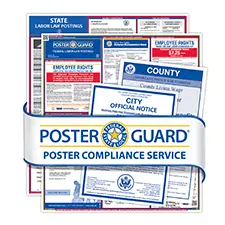
Kaplan noted that G.Neil developed its Poster Guard Compliance Protection product with business owners’ input and needs in mind. “Our staff of attorneys keeps pace with continually changing labor law requirements, eliminating employers’ posting compliance headaches,” said Kaplan. For a small annual fee, businesses are alerted when any change occurs and are automatically sent updated posters when required. Poster Guard Compliance Protection also guarantees against agency fines, delivers poster updates within 30 days of law changes, and ensures business owners never have to worry about posting compliance again.

Visit www.gneil.com/posterguard or call 800-999-9111 for more information on Poster Guard™ Compliance Protection guaranteed by G.Neil.


Back To Top
Federal Immigration Legislation Could Have Costly Consequences for Employers

Proposed immigration reform legislation making its way through Congress could have some costly ramifications for U.S. employers, especially those in states with large numbers of illegal residents.

"Nearly all the legislation pending in Congress will increase the burden of employment verification for employers," says attorney Ashley Kaplan, head of the labor law research team at Sunrise-based G.Neil Corp.

"Recent federal crackdowns on illegal workers have resulted in serious criminal action against companies and executives," she continued, "and the proposed legislation carries even harsher penalties, so smart employers should start taking corrective measures now."

Employers Have Been on the Front Lines for 20 Years

Current U.S. immigration law is based in large part, Kaplan noted, on 1986 legislation that requires companies to determine whether their employees are authorized to work in the United States. For all newly hired employees, employers must fill out a Form I-9, which indicates what documents the employees submitted to prove their work eligibility.

"The law basically requires employers to verify a worker’s identity and work eligibility. Most employees present a driver’s license and a Social Security card, both of which are readily available on the black market," she said. "But if employers attempt to ask a few questions beyond this documentation to verify eligibility, they could be sued for discrimination based on national origin."

"Legally, it’s a very thorny situation and, 20 years later, employers are still on the front lines of attempting to sort legal from illegal employees. If the federal government is having such a hard time with these issues, you can only imagine how difficult a task it is for private employers."

Strong Penalties for Hiring Illegal Immigrants

Homeland Security Secretary Michael Chertoff recently said the federal government planned to "break the back" of businesses that hire undocumented aliens. Legislation pending in the House would fine employers up to $40,000 for such hiring’s, and a Senate proposal would impose fines of up to $20,000 and up to three years in prison for a violation.

An electronic verification program would be mandatory under both versions of the legislation, Kaplan said. The House bill requires employers to participate in three to six years; the Senate, in 18 months.

"In this climate, with people out in the streets protesting by the thousands and punitive legislation being seriously proposed, it is essential that employers stay informed and be extremely thorough with employment documentation," Kaplan advised.
                        
Based in Sunrise, Fla., G.Neil provides a complete range of employment documentation products, including legally compliant job applications, Forms I-9 and W-4, and a detailed I-9 Recordkeeping Compliance Kit to help employers stay within the letter of the law. For more information or to request a catalog, call toll-free 1-800-999-9111 or visit www.gneil.com.


Back To Top
Recent Influx of State Labor Law Changes Affects Employers

Almost every week, state labor laws are changed by the legislature or agency regulations. These labor laws often require employers to inform employees of certain protections and rights by posting state-mandated posters.

Employers who don’t post the most recent labor law posters risk fines for not being in state posting compliance. But getting into and staying in compliance are not that easy, says attorney Ashley Kaplan, head of the labor law research team at Sunrise-based G.Neil Corp.

"Since January 16, 2006, there have been more than 30 poster changes in 19 states and the District of Columbia," she noted. "A few states had as many as five of their mandatory posters revised. All this in just four months can be burdensome for employers, especially those with operations in more than one state."

What You Need to Know About State Poster Compliance
In addition to required federal labor law postings, each state has mandatory postings to inform employees of their rights – and responsibilities. Because each state establishes its own laws – and changes them at will – no two states have the same requirements.

Kaplan explained, "Your state can require postings for fair employment, workers’ compensation, leave of absence, child labor, whistleblower protection, state minimum wage, and all sorts of things."

"Don’t make the mistake," she stressed to employers, "of thinking the state government doesn’t think its posters are important. The absence of a single poster on your bulletin board could cost you thousands of dollars in fines. I’d think twice before I risked it."

Make Sure You Know the Basics for Compliance
If your business has more than one location or you have branch offices in other states, you are required to post the appropriate state labor law notices to all your employees there, Kaplan explained, or risk the same penalties. And protecting yourself can be costly and time-consuming.

"Not many companies, especially smaller ones, have the resources to devote to labor law compliance," Kaplan noted. "You have to assign someone to keep track of action in the legislature and in the various regulatory agencies, and even with a full-time person on it, you’re still going to miss a poster change every now and then. It’s much more efficient and economical to outsource it."

Sunrise-based G.Neil provides continual labor law posting research and offers all mandatory federal labor law posters as well as an annual subscription service that guarantees compliance. For more information or to request a catalog, call toll-free 1-800-999-9111 or visit www.gneil.com.


Back To Top
New HIPAA Regulations Taking Effect April 21
The Health Insurance Portability and Accountability Act’s (HIPAA) new security rule mandates that covered entities safeguard protected health information that is electronically stored and transmitted. The deadline for small health plans with annual receipts of $5 million or less is April 21, 2006.

Unfortunately for employers, the new rule is neither brief nor simple, says Ashley Kaplan, head of the Sunrise-based G.Neil Corp. labor law team.

“The HIPAA security rule mandates highly detailed standards for the protection of electronic health information,” she said.

Who Must Comply?
If your company offers healthcare benefits or if you use employees’ and applicants’ protected health information to make employment decisions (such as hiring, FMLA leave, workplace drug screening, you must comply with the Health Insurance Portability and Accountability Act.

Ashley Kaplan and the legal team at G.Neil advise employers to be aware of these basics of the security rule:
  • The integrity, confidentiality and availability of electronic health information must be protected whether the covered entity creates, receives, stores or transmits the information.
  • The information must be protected against any reasonably anticipated threat or hazard to the security or integrity of such information.
  • The Security Rule includes many other administrative, physical and technical standards.

    Editor’s Note: Most covered entities with receipts over $5 million needed to comply by 4/21/05

    G.Neil, which has specialized in labor law and human resource solutions for more than 15 years, offers numerous tools to help employers comply with HIPAA, including its HIPAA Comprehensive Answer Kit.


    Back To Top